A Mass Within the Mass

A Mass Within the Mass

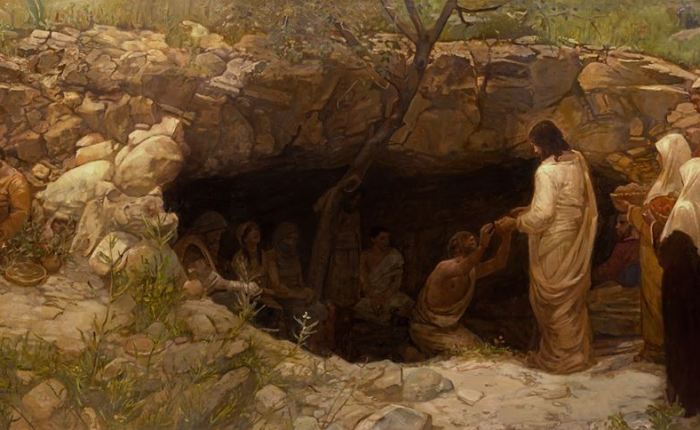
If the Last Supper was the very first Catholic Mass, then this week’s Gospel reading has to be the second one. The middle 22 verses of Luke 24 contain almost all the significant elements of the Mass we celebrate today. It begins with a procession, not from the back of the church to the altar, but from Jerusalem to Emmaus. Along the way, the two disciples meet Jesus, though they don’t know its him. They introduce themselves, explaining their heartbreaking situation (the introductory and penitential rites). They tell the stranger all that Jesus said and did, leading up to His suffering and death, and show confusion and doubt about the Resurrection account offered by the women at the tomb. Jesus, still unknown to them, breaks open the old testament (the first reading and the psalm) and shows them how the scriptures were talking about Him (the second reading and the Gospel). He helps them to understand how the Word of God applies to their life (the homily). Sensing Jesus is leaving, the disciples petition Him to stay (the prayers of the faithful). He obliges and stays for supper–taking bread, blessing and breaking it. (Liturgy of the Eucharist and Communion). Finally, they see it is Jesus. In awe and wonder, they ask how they could have possibly not known, “Were not our hearts burning while he spoke?” Saint Luke tells us that they set out to Jerusalem at once to announce the good news, but I’m sure they stayed through the announcements, final blessing and all four verses of the closing hymn.

Do we feel this same burning in our hearts at Mass? Do we leave Mass on fire for Jesus? I don’t mean an emotional response that can burn out as quickly as it flares up, but a real sustained fire that compels us to share the good news with everyone. I’d like to humbly offer some helps to building such a fire. These are some ways to open our hearts to receive as much grace from Holy Mass as we can. They range from simple to incredibly awkward.

  1. Read the readings before Mass. This wasn’t something I did until I started selecting songs for Mass on a regular basis. It gives me the opportunity to think and pray about the themes of the Mass before I even arrive at the church. Familiarity with the readings makes every prayer and hymn come to life. You can find them online pretty easily.
  2. Respond. In December of 2016, after a terror attack on a Coptic Christian cathedral in Egpyt, demonstrators took to the streets in support of the victims. A video emerged of people not just reciting the Nicene Creed, but declaring itWhile not in English, you can hear the familiar rhythm and cadence of the Creed. The freedom we have to worship openly should be a reason to respond even more boldly, both in gratitude and in solidarity with our persecuted brothers and sisters. The responses we declare at Mass are an emptying of self. And, ultimately, the more of ourselves we invest in participating in the Mass, the more room we make for Jesus.
  3. Sing. I joke with my pastor that I long for the day when we have to hold a second collection to repair all the cracks in the ceiling caused by singing Jesus’ praise. It’s difficult to be disengaged when you sing. Nothing creates a sense of community like singing together. A common objection is, “but I have a terrible voice!” Then sing out! If it’s truly that terrible God might hear it and give you a better one. In the very least the people around you will sing louder to drown you out.
  4. Pray with and for each other. Here’s the awkwardness I promised. Too many Catholics, without realizing it, treat the Mass like a personal devotion. I’m guilty of this from time to time. The Mass isn’t a private prayer. It’s part of the public prayer of the Church. I have a greater Mass experience by knowing the readings, boldly responding, and singing my heart out. The reality is that I also owe it to you to do these things. As much as we should actively participate in the celebration for our own good, we should also do so for the rest of our parish family. When I mumble responses, only sing the hymns I like, and let distractions pull me from praying as best I can, I drag you down. To make the communal experience of the Mass more real, try this: Turn to someone near you before Mass and introduce yourself if you don’t know them. Now—here’s the hard part—ask them to pray for a specific intention you or your family has, and ask them if there’s anything they need you (and your family) to offer as part of your Mass intention. And then really, earnestly pray for that person.

In the Eucharist we have access to infinite Mercy and Grace! When we receive, our hearts should be burning with desire to know Jesus and to make Him known. I hope these small suggestions can be kindling for that fire.

On Deflated Hope

On Deflated Hope

Hope? Let me tell you something, my friend. Hope is a dangerous thing. Hope can drive a man insane.”

– Ellis Boyd ‘Red’ Redding

I must admit, to my great shame, that I lost hope. It was for a fleeting second, and I’m not even sure it was an intentional thought. It snuck up on me. The New England Patriots had just scored making it a 28-18 game with 5:56 on the game clock in the fourth quarter of Super Bowl LI. They were attempting a 2-point conversion and I had this thought: “Please miss this.” I know, I’m so embarrassed. I immediately dismissed the thought but I’m still ashamed that it was even hiding in my head somewhere. But I understand it’s origin.

At that point in the game I had already begun the difficult work of accepting a disappointing outcome. I had let myself grow detached from any desire for victory and simply wanted to see my team erase some of its huge deficit to make the loss respectable. I’m not a football expert but I have gleaned some things from listening to my fair share of angry sports radio. Being so far behind, with so little time left, they couldn’t just be good. They had to be perfect. And they would need some absolute miracles along the way.

And they were perfect. And they got a few miracles (Edelman’s catch, are you kidding me?!) And I was wrong to despair. Haven’t I seen Brady and Belichick do this before? I had every reason to hope, but the difficult road ahead let despair creep in.

 I think we lose hope because of how dangerous it is. Disappointment is easier when we can brace for impact. So we settle for being “good enough” and resist anything that draws us up and out of being merely good to being perfect. Internal voices and those people around us ask the question, “What right do you have to desire and to expect perfection? You’re just so far from perfect!”

Over the last few Sundays we’ve been hearing Matthew 5. Jesus has been laying out the structure of His Kingdom and describing the attributes of its citizens. After all, winning citizenship in the Kingdom of God is our greatest hope—far greater than the hope of winning a Super Bowl. But His demands so are hard. We are blessed when we’re poor and mourning? We should pray for those who hate us and go the extra mile when our service is demanded? We should give until it hurts? Maybe what he means is that we should generally try our best to be a good person and show kindness most of the time. But no. He clarified it for us with these words: “So be perfect, just as your heavenly Father is perfect.”

It’s enough to cause that same voice in my head that said, “please miss this,” during the game to say something similar in response to Jesus. Because if hoping for the Kingdom of God relies on my being as perfect as our heavenly Father, then part of me would rather not try. Part of me would rather accept being “good enough” and losing in a respectable way. In this week’s Gospel reading, Jesus speaks directly to that part of me:

“But seek first his kingdom and his righteousness, and all these things shall be yours as well.”

Jesus speaks of worrying about food, drink, and clothing and tells us not to worry about where we will get them. In some sense He is talking about literal food and drink and clothing, but He means more than that. He means that God will provide exactly what we need to be citizens who have a right to desire and expect our own perfection in His Kingdom. Brady and Belichick are a fantastic team, but they have nothing on the Father, the Son and the Holy Spirit. The road to victory is difficult, demands perfection and seems impossible. But nothing is impossible for God. He gives us the church, where we pray for and build each other up. He gives us the Holy Spirit who makes us holy and begins the process of perfecting us. He sends miracles along the way, the greatest of which is the Eucharist—Jesus, truly present and alive in our midst. The sacraments are all miracles, Edelman-like catches that provide a spark and ignite us onward and upward.

If being perfect, as the Father is perfect, completely depends on my efforts, then there is no hope. I’m more likely to lead a fourth quarter down-by-25–come-from-behind Super Bowl comeback win. But thanks be to God that perfection and eternal citizenship in His Kingdom are not up to our efforts alone. Because we have Jesus, we can hope.

When Christmas isn’t What You Expected

When Christmas isn’t What You Expected

Three children. God is good and we were truly blessed. First God gave us Ronan, then Caleb and now a new child would change our life forever (again). And if the miracle of it all weren’t plainly obvious already the baby’s due date underscored what a gift we had been given: December 24th. We were obviously going to need a Christmas themed name. Maybe Noelle for a girl? Or Holly? After two boys we were fairly certain this third child would be a girl. We both liked the name Gabriella in honor of the angel Gabriel.

Just shy of 12 weeks into the pregnancy we learned that we had lost the baby. As our expectations for the future were dashed, the decade old wounds from Ronan’s death reopened, wounds which I thought were fairly well healed. My prayer life shrank. Mostly it shrank down to just one word: Why? If I had my way I would be waking up this Christmas morning to embrace my 10 year old son, his 16 month old brother and their newborn sibling. Jesus, why can’t I have that? I know that my ways are not his ways.   The Lord gave and the Lord has taken away; blessed be the name of the Lord.  I have to trust Him.

Trust can be a bitter pill to swallow. This is especially so when our expectations aren’t met. This season can be one of such wonder, excitement and joy. But the season of light can also painfully illuminate those areas of our lives that fall short of our expectations. For so many the joy of Christmas will be accompanied by the sorrow of empty chairs, illness, addiction, divorce, discord with loved ones, financial hardship—the list seems endless. What does God say in answer to our collective why? He asks us to trust Him. To trust that in all things, even the worst things, He is working for the good of those who love Him.

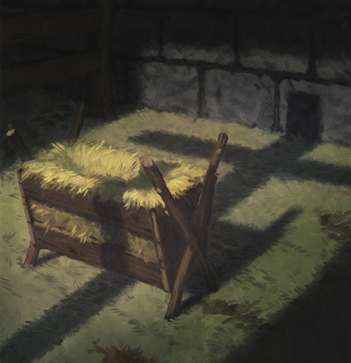
Christmas is all about defied expectations. A young virgin is pregnant and her soon to be husband is not the biological father. The long awaited Messiah of the Jewish people was expected to be a mighty king like David, not a poor, temporarily homeless child born in a stable. And yet this little baby is the rival to King Herod and Caesar Augustus. The Sovereign King of the Universe was tiny, naked, cold and crying in His teen mother’s arms. The only witnesses to the arrival of the Author of Life in our midst are Mary, Joseph, some shepherds, and a few animals. Yet his birth points toward our salvation and gives hints of how it will come about. The manger isn’t a special crib for babies but a place to put food for us, the sheep.  Myrrh is an embalming oil for the dead, not a children’s toy. We hear the story so often we forget how astounding and unexpected it all is. One of the most remarkable things for me is Mary and Joseph’s trust in the Father’s plan of loving goodness. They had no way of knowing then that their difficult circumstances were part of an unfolding plan of cosmic proportion that would ultimately end on the day when their own Son would wipe away the tears from every eye. They simply trusted.

This Christmas will not be what you or I had expected it to be. But with the eyes of faith we can see, despite appearances to the contrary, that our Father still has a plan for us and that plan is ultimately for our good—for a future filled with hope. Our God is with us to save us. Jesus I trust in you. Merry Christmas.

In Jesus and Mary,

Frank


Holy Darkness

Holy Darkness

When I was in fifth grade I went camping with my Dad. Camping was always special for us. Camping trips with my dad are among the happiest memories of my childhood. This one camping trip I remember for a couple of reasons. First, we ate the largest can of Chef Boyardee Beef Ravioli (the finest ravioli there is) I have ever seen. Second, I just recently had my tonsils removed thus it had to be a more low-key weekend adventure as to avoid dislodging clots and bleeding to death (or something like that). Third, unlike most of our camping trips, which we took in the summer, this one was in December.

At night we walked down to the shore of the lake, which had frozen early that year and was covered in snow. It was a moonless night and being December the Milky Way wasn’t visible so the only light to see by came from the thousands of stars that shone weakly in the sky. They gave the sprawling field of snow in front of us a deep blue hue. The windless winter night was silent—no sirens, no car engines, no insect noises, no rustling leaves.  And I clearly remember feeling, in that darkness and silence, that I was experiencing something profoundly holy. I didn’t have that specific word for it at the time.  I just felt an overwhelming sense of gratitude to God for the temporary elimination of things that so often amuse me and attract my attention, yet hide His sacred whisper which waits just beneath it all.

Sometimes I play a really strange game in my head. I say, “If I were Satan I would…” This isn’t my idea so I should get neither the credit for its ingenuity nor the blame for how weird it is. My little mental and spiritual exercise is in the tradition of C.S. Lewis’ Screwtape Letters (which you should read if you haven’t, followed by Peter Kreeft’s Snakebite Letters). This exercise helps me to discern some of the invisible forces that influence our world. A number of years ago I came to this conclusion: If I were Satan, I would never permit darkness or silence. TV, smartphone, tablet and computer screens would never go blank. Lights would never go down low enough to allow the heavens to declare God’s glory. Noise would be ceaseless, whether music (good and bad) or the ceaseless hums, buzzes, beeps, chirps, and whirs of modern life. Incessant chatter about nothing and constant gossip would fill in any quiet pauses. There would be no time for peaceful contemplation—the kind where we might hear Jesus speak deep within.

I think this is exactly what Satan has done, and it is working. Our world is so often full of “noise and fury, signifying nothing,” that we can barely hear our own thoughts, let alone hear the still, small voice of Jesus in our hearts. The world is blinding and loud. Compare this map to this map and you can see what effect this has on our ability to respond to the prompting of the Holy Spirit within us. Sometimes I wonder if we could halt and reverse the western world’s flight from God and religion by shutting off the electricity for one night every few years. That’s unlikely, and our aim as Catholics shouldn’t be to find God by shunning modern life but to find Him in the midst of it.

Advent is a season of darkness and silence that ushers in a season of light and joyous celebration. Without the former we can’t fully appreciate the latter.  By embracing silence at times we can hear what we otherwise would not be able to hear. When Katie was pregnant, she felt Caleb moving within her long before I could feel him outside. In silence we can feel the Holy Spirit moving within, even when the world tries to tell us otherwise. In darkness our eyes adjust to see even the faintest stars. In the darkness of Advent the eyes of faith adjust to see the light of Christ that shines in the darkness—the Light that the darkness cannot overcome. I pray you find time in the remaining days of Advent to be immersed in holy darkness and sacred silence as you prepare your heart to receive the Light of the World.

Click Here and You Could Have a Free Fiat!

Click Here and You Could Have a Free Fiat!

Did I get your attention?

Now I get to be a huge disappointment. There is no car giveaway. Sorry.

There’s good news though. Keep reading and there might still be a free fiat in this for you.

I love the Immaculate Conception. And by that I mean the Solemnity we celebrate today as well as the person. After all, the BVM did tell Saint Bernadette that she is the Immaculate Conception. Immaculate Conception is one of those Catholic buzzwords that can easily end up being so heady and profound that it loses any useful meaning. It did for me until a few years ago when I read for the first time what Immaculate Conception meant in terms that were so simple even I understood them.

Saint Maximilian Kolbe (a recurring hero you know if you follow this blog) taught that the Holy Spirit is the “uncreated, eternal conception” of the love between the Father and the Son. And the Spirit is, by His divine nature, immaculate or free from sin. When Mary declared to Saint Bernadette that she is the Immaculate Conception what she was really saying was that she has identified with the Holy Spirit from the very first instant of her existence. As long as she has been, the Holy Spirit has dwelt with her and in her.

Because of this indwelling of the Spirit, Mary’s “yes” to the Angel Gabriel was the freest “yes” ever uttered by human lips. For where the Spirit of the Lord is, there is freedom.

(She actually said, “Let it be done” which is fiat in Latin. So…there’s the free fiat. I never disappoint)

This is a special grace Mary received from her Son Jesus–the indwelling of the Spirit. A few years after I learned this, I found out something else too. The exact same grace given to the Blessed Mother at her conception is offered to us as well. The prayers for today’s Mass make clear,  the grace of the Immaculate Conception is the foreseen grace given by Christ from the cross.

The Holy Spirit desires to dwell in you and me. And by receiving Him we will be made free. Hopefully, we’ll be made free enough to echo the fiat of the Immaculate Conception. So we offer Mary our veneration*, ask for her intercession, and look to her as the model of perfect discipleship.

“And Mary said, ‘Behold, I am the handmaid of the Lord; let it be to me according to your word.'”


*Hyperdulia if you’re looking to get fancy.

Feet Fit for a King

Feet Fit for a King

On Monday we wrapped up another amazing EDGE middle school night. It was truly a blessed night touched by the Spirit in every way. Then I went to leave. As I was turning off the lights I heard a small and but unmistakable voice say, “Please use your iPhone flashlight.” As I’m sure you’ve already guessed, it was my feet. Specifically, my toes.  

Let me back up here and explain.

See, EDGE gathers in the lower church meeting space. And the lower church was not designed in a way that anticipated my exact needs (the nerve). The light switch is at the front of the room. The exit is at the back. When leaving, you have to switch off the light and then make your way to the back in complete darkness. It’s a treacherous journey fraught with perils such as Folding Chairs, Round Tables, and of course Solid Oak Pews On Which You Can Whack Your Knee.  Each time I make the journey I feel like Frodo going through Mordor with Sam to destroy the One Ring.

And each time I make this journey I have the same internal trialogue. My toes say, “Kindly use your flashlight app,” and my knees agree wholeheartedly. My eyes say, “Nonsense, I’ll adjust to the darkness in no time and see just fine.” And my brain, who is probably the worst of the three, comes up with these grand ideas about memorizing the position of each chair prior to shutting the lights off, creating a mental map and then using its superior Spatial Relations Skills to make an incident free exit.

And almost each time my toes (and knee) are right to worry. My eyes and brain don’t have evil intentions (though they do suffer from the sin of pride), they’re just not down there at the bottom where the impact of what they do is felt the most. It makes so much more sense to think of the concerns of the member of my body that stands to suffer the most by my inevitably fallible decision making.

In Catholic teaching on social justice we have this principle called the Preferential Option for the Poor. What that means is as Catholics we must, in all circumstances, consider the full impact of our actions on the poor and act in a way that promotes their well being. Or in other words, think first of the concerns of the members of the human family who suffer the most. That’s the rule of Christ’s Kingdom. In His Reign the first are last and the last are first. Jesus Christ is our Lord, King of the Universe and His vast and cosmic Kingship begins with and sees from the viewpoint of the toes.

If we are to be faithful stewards of Christ the King then we need to be more aware of who the toes are in every situation. Poverty is not merely about money. That’s far too narrow a view. There is material poverty all around us, true. The young, especially the very young, most especially the unborn are among the poor. The elderly, and people suffering from illness of mind and body are also among the poor. Immigrants, ethnic, racial and religious minorities, people who identify as LGBT, people suffering from addictions, people imprisoned whether justly or unjustly—all are counted among the poor. Even more, there is spiritual poverty. Spiritual poverty is far more pervasive in our society—those who suffer a poverty of love, a poverty of joy, who are deprived of peace. These suffer the greatest poverty of all—to not know and trust Jesus.

There are countless spiritual poor who have never heard the Good News that there is more to this life, that the God who made them desperately loves them, that He entered into the state of being a fellow toe, died on the cross for their sin and brokenness, rose again on the third day and calls them to Life Eternal. In Jesus’ reign the needs of the poor, both the spiritual and material, come first. And not their needs as they perceive them to be, but as He knows them to be. The hungry need food, the ostracized need a loving embrace, the lost sheep need the Good Shepherd.

We must avoid the temptation to see Christ and His Church as the means to ultimately ending poverty. That makes an idol of social justice and thwarts any effort to build His Kingdom. The noble pursuit of true and lasting justice can only flourish when we realize that life in Christ is the greatest good. If only we could live life fully devoted in service to Him, longing for the day when we hear the words, “Well done good and faithful servant. Enter into my joy!” (Matthew 25:21) Because Our Lord Jesus Christ, King of the Universe doesn’t long for a kingdom of servants and slaves, but of friends— of Saints.

God of the Living

God of the Living

This past summer I took Caleb on his first major hike. We had done a bunch of other hikes in the Blue Hills, but none of them were more than a few hundred feet in altitude. This hike was decent. We went up Loon Mountain in Lincoln, NH.  Loon is just over three thousand feet (3064’ to be precise) so I’m proud to say Caleb has summited a three thousand footer. He did a fantastic job too.

I did have some initial reservations about whether he could make the climb. I didn’t know what the weather was like up there or if some parts of the trail would prove to be too steep or treacherous. So to put my mind at ease as to its “doability” I decided to first hike it without him. It was a rainy day and everyone was watching Netflix at our rental home, so I stepped out into the mist alone and climbed up Loon Mountain as a trial run. The view was terrible img_2665

The next day I decided it would be possible for Caleb to make it to the summit. Having been up that trail and on the mountain top I was confident he could go there too. Of course, I also carried him on my back the whole way. For the most part he enjoyed the hike. His favorite part seemed to be pulling my hair, but to be honest I think he was trying to steer me like a horse.

Following Jesus in this life also leads to a mountain top. And being His disciple is scary, because that mountain top is Calvary. To follow Jesus necessarily means denying ourselves, taking up our crosses and dying to sin and selfishness. Not all of us will be called to the bloody martyrdom that was the fate of so many of our saints, and is still the fate of so many Christians in the world today. But all are called to loving sacrifice. Saint Maximilian Kolbe taught that there is no love without sacrifice. And following Jesus up this trail of sacrificial love isn’t always easy. It can mean rejecting pride and embracing humility,  or going beyond what is comfortable, or letting worldly measures of success fall by the wayside, or charitably expressing difficult truths to friends and family. And we know that the Cross is what waits at the end of the trail. But we can take heart. Our Lord knows the trials of this trail but He has confidence in our ability to walk the narrow and difficult road. After all, He did it first. And Jesus reminds us in the Sacraments, in Sacred Scripture, in the friendship of fellow disciples and in the refuge of prayer that He is willing to carry us.

One last thought: This Sunday’s readings are a reminder that while the journey of discipleship leads inevitably to the cross, it doesn’t end at the cross. We know that God who called us along this trail will again call us forth to eternal life.  And on that day when His Glory appears, our joy will be complete.


And Heaven Meets Earth Like a Sloppy Wet Kiss

And Heaven Meets Earth Like a Sloppy Wet Kiss

I hate boogers. I have a pretty strong stomach. There are very few things that gross me out. Before I worked for the church I was an EMT at a private ambulance company. People would always ask what was the most disturbing or disgusting thing I had ever seen. Blood? No. Broken bones? Easy to handle. Burns? Nope. That disgusting distinction went to mucus and anything else that emerged from the nose. I’m getting sick just writing this.

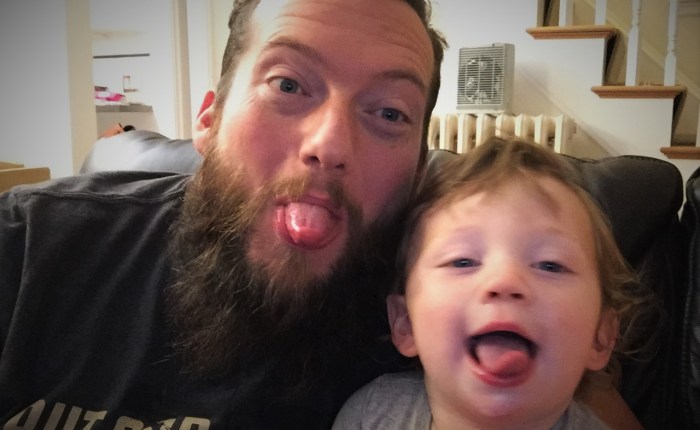
I’ve noticed something about my son Caleb. His desire to give me kisses is in direct proportion to the amount of runny nose that has made its way to his mouth. I wish I were making this up. Dry and clean nose? Get away from me dad! Slimy, salty river of snot? You’ve never seen such an affectionate child. But you know what? Much to my surprise it doesn’t gross me out. I’ll take the gross kisses. After all, I love him. If love is stronger than death I have to believe it’s stronger than boogers. So when Caleb leans in for a kiss with a shiny upper lip, he gets a kiss. Then I wipe his face clean. But always love first, without delay, without condition. I’m compelled to. It’s never even a question.  What if I demanded a clean face first? That would place conditions on my love for him. “I love you, but only if…”

Zacchaeus was a tax collector. Tax collectors are corrupt traitors to their people. Their faces are absolutely covered in snot. Zacchaeus knew this, but he also knew he needed Jesus, who had come to town. Zacchaeus raced ahead of the crowds and climbed into a sycamore tree to get a better view. And then Mercy was compelled to act. Mercy is what Love looks like when it meets brokenness, messiness and sin. Listen to Jesus’ words, “Zacchaeus, come down quickly, for today I must stay at your house.” Zacchaeus steps out in faith, literally “goes out on a limb” for Christ and the response is immediate. Jesus must draw closer to Zacchaeus, quickly and without condition. Zacchaeus’ decision to repent of his sin and make amends for any dishonesty is not the cause of Jesus’ love, but the fruit that comes from it. His encounter with Jesus transforms him in an instant.

Jesus calls us to run to him quickly. He must come to dwell with us because He loves us. He wants me and you, snots and all, to know Him. By faith we go out on a limb like Zacchaeus and with the grace we receive through the sacraments “God makes us worthy of his calling.” I pray you have that same transformational encounter with God, who is love and mercy, in the person of Jesus Christ.


The Big Cuppers

The Big Cuppers

Does God love some people more than others? In one sense, no, He doesn’t. After all, God is love. When we love each other we are actually participating in God’s love. Because of this we can choose to participate in that love more or less or even not at all. But God is infinite and God is love. Saying God loves one person more than another makes no sense because His love is already infinite. Infinity plus one is still infinity.

On the other hand, God seems to make more of His infinite love available to some people. There are some people who feel a near constant awareness of God’s love for them and many who don’t. Saint Therese made an analogy to explain this. Even though she was talking about the different glories that await each of us in Heaven, I (hopefully with the Little Flower’s blessing) want to paraphrase her here. Imagine a large cup and next to it is a thimble. They’re both filled  to the brim with water. They hold different amounts but it would be impossible to add anything to either container. Our capacity to experience God’s love is like that. Some of us have big cups, some have thimbles. Some have oceans, some have eye droppers. But all are full. So what is the secret that the big cuppers hold?

I don’t think the secret is trying to get God to love you more. That’s impossible. Our list of accomplishments, merits, awards, talents, important jobs, good grades, the number of friends we have, big paychecks, good deeds—none of it can increase God’s love for us, which is already infinite. Jesus gives us the secret to having a greater capacity to be loved by Him with the parable of the Pharisee and the Tax Collector. In the parable Jesus tells us about two men praying in the temple: a self-righteous Pharisee who thanks God for making him better than everyone else and a humble tax collector who asks God for mercy. The Pharisee falls short not just because he is judgmental and dismissive of the tax collector. If we get caught up on the “judge not” message alone we will miss something hugely important. Yes, the Pharisee is wrong to judge, but he misses the mark even further by thinking he has earned God’s love by his tithing, fasting and self-righteousness. He is completely blind to his unworthiness and closed off to mercy. We can often be like the Pharisee in this second sense. True, we tend not to judge the “tax collectors” in our lives because we are good and decent people. But we can fall into the trap of believing that everything is ok. That we don’t need Jesus’ mercy every hour of every day. That crying out to God is for other people, people with problems. Not us. We too can be closed off to mercy.

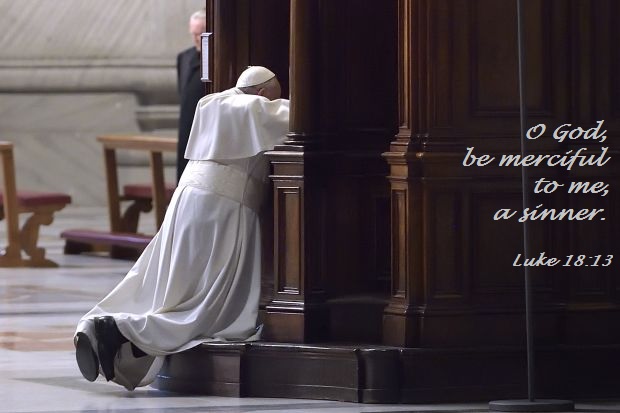
The tax collector, aware of his brokenness, is open to receive mercy. “O God, be merciful to me, a sinner” is the motto of the big cuppers. The saints (just a fancy word for big cuppers) all had in common a profound awareness of their own sin and brokenness. From the outside this can look like hand-wringing guilt, but nothing could be further from the truth. Declarations like “Lord I need You!” and “O God, be merciful to me, a sinner!” are the secret to experiencing the fullness of God’s love and the freedom from anxiety, abundant joy and peace that only Christ can give.

Healer

Healer

When I was a kid I thought Jesus healed leopards. They called them leopards because their skin was covered in spots. Obviously. And a leopard can’t change his spots (that saying actually comes from Jeremiah 13:23) so Jesus preformed the miracle of changing their spots for them. I really did believe this until I learned what leprosy really was (and still is). It’s generally accepted that the ancient disease was caused by the same bacteria as the modern one, mycobacterium leprae. It is still around in many parts of the world but unlike in Jesus time, it is extremely treatable. Leprosy was so feared that people suffering from it were exiled from their community and forced to warn others when they approached. Many other skin conditions were lumped in with leprosy too. It makes me think twice before I complain about my psoriasis. After all, I don’t have to live in a leper colony (although living in a leopard colony would be kinda cool).

There is a biblical connection between leprosy and sin. In the Old Testament leprosy is seen as a punishment for sin. The gospels point to leprosy not as an effect of sin, but as an analogy for it. Like sin it is ugly, it disfigures, it can spread and it separates us—separates us from each other and from God. And just as Jesus, in his mercy, desired to free the ten lepers of their physical disease, he also desires to free us from our spiritual disease. If only we have the courage to echo the words of the lepers, “Jesus, Master! Have pity on us!” Christ wants to set us free, wants to heal us. But he waits for our permission to act.

Saint Francis of Assisi, whose memorial we observed this week, was absolutely repulsed by leprosy and sufferers of leprosy. Early in his radical conversion he met a leper on the road and knew what he had to do. He gave the man money, embraced him and kissed his sores. In that moment he realized that he was embracing and kissing Jesus. In an instant Saint Francis’ sin of indifference and aversion to suffering was healed. We have access to the same sanctifying grace and healing in the sacraments. We only need to ask.